A Guide to Everyday Jamaican Food and Special Meals

Jamaican food is often introduced to outsiders through a few famous dishes, usually jerk chicken, patties, and maybe a plate of ackee and saltfish. Those are important, but they only tell part of the story. The real shape of Jamaican cooking appears in the meals people eat on ordinary weekdays, in the soup pot on a Saturday, in the Sunday dinner that gathers several generations at one table, and in the dishes saved for Christmas, Easter, or a funeral repast. It is food built from memory, thrift, skill, and appetite. It is also food that changes from parish to parish, town to country, and home to home.
What makes Jamaican cooking distinctive is not only flavor, though flavor matters a great deal. It is the way cooks layer heat, sweetness, smoke, herbs, starch, and salt until a meal feels complete. A proper plate often balances several things at once: something stewed or curried, something starchy, something fresh or pickled, and often a gravy worth spooning over rice. Even when ingredients are modest, the result is deeply satisfying.
Anyone trying to understand everyday Jamaican food should start with this idea: there is no sharp line between practical home cooking and celebratory cooking. The same kitchen that turns out boiled green bananas and mackerel for breakfast can produce pepper pot soup, brown stew chicken, roast yam, and sorrel at Christmas. The difference is often scale, patience, and the occasion, not a completely separate cuisine.
The backbone of a Jamaican kitchen
A Jamaican meal begins long before the pot goes on the stove. It begins with what is kept on hand and what is available nearby. In many homes, especially those shaped by older habits, the pantry and kitchen garden matter as much as a formal recipe. Fresh thyme, scallion, Scotch bonnet pepper, onions, garlic, ginger, allspice, and pimento wood have an outsized role in seasoning. Coconut milk, dried peas, saltfish, flour, rice, yams, sweet potatoes, and green bananas stretch a household budget while still feeding people well.
The island’s food traditions also reflect history in plain view. African cooking methods, British colonial influence, Indian curries, Chinese migration, Spanish traces, and indigenous ingredients all left marks on the table. That is why Jamaican food can move so naturally from steamed callaloo to curry goat, from bun and cheese to fried dumpling, from escovitch fish to mannish water. The cuisine is unified not by one technique but by a shared sense of seasoning and a confidence with bold contrasts.
If you spend time in Jamaican homes or cookshops, a few ingredients show up again and again:
- Scotch bonnet pepper for heat and aroma
- Fresh thyme and scallion for savory depth
- Allspice, often called pimento, for warmth
- Coconut milk for body and sweetness
- Ground provisions such as yam, green banana, coco, and dumpling for substance
That list looks simple, but it explains a lot. Scotch bonnet does more than make food hot. Used well, it perfumes a pot without overwhelming it. Thyme and scallion give many dishes their recognizable foundation. Coconut milk can soften sharper flavors, especially in rice and peas or rundown. Ground provisions turn a meal from a side dish into dinner.
Breakfast is serious business
Breakfast in Jamaica is not always light. In fact, some of the most filling meals of the day appear in the morning. That surprises visitors who expect toast or cereal. A breakfast table can include starches, fish, dumplings, and sautéed greens, especially on weekends or holidays.
Ackee and saltfish is the best known breakfast dish, and for good reason. When cooked properly, ackee becomes soft and creamy, almost like scrambled egg in texture, though milder and more delicate. Saltfish brings chew, salinity, and depth. Onions, tomatoes, black pepper, thyme, scallion, and Scotch bonnet round it out. The dish usually arrives with fried dumpling, boiled green bananas, roasted breadfruit, or festival. A good version should not be greasy or mushy. The ackee should hold some shape, and the saltfish should be properly soaked so the salt enhances rather than dominates.
Callaloo, whether served alone or with saltfish, is another breakfast staple. It is earthy, green, and often cooked down with onion, garlic, tomato, and pepper until it is tender but not lifeless. In many homes, breakfast also means mackerel rundown, liver, boiled food, or porridge. Cornmeal porridge, peanut porridge, banana porridge, and plantain porridge are all common, especially for children and anyone wanting a substantial start to the day.
The practical logic is easy to see. Heavier breakfasts support long workdays, school days, market trips, or agricultural labor. Even in more urban settings, those habits linger because https://www.google.com/maps?cid=36489603840858277 they satisfy. A bowl of porridge or a plate of boiled dumplings and salt mackerel stays with you in a way a sweet pastry does not.
The language of starches and “ground provisions”
One of the easiest ways to misunderstand Jamaican food is to treat the starch on the plate as a bland side. In a Jamaican meal, starch is rarely an afterthought. Rice and peas, white rice, bammy, boiled dumpling, fried dumpling, festival, roasted breadfruit, yam, green banana, coco, cassava, and sweet potato each carry their own taste and texture.
Rice and peas deserves special mention because people outside Jamaica often confuse it with a generic bean-and-rice dish. In Jamaica, “peas” commonly means kidney beans or gungo peas, depending on the season and dish. The rice is usually cooked with coconut milk, thyme, scallion, garlic, and sometimes allspice, which gives it fragrance and a richer personality than plain steamed rice. On a good Sunday plate, the rice and peas is not just there to fill space. It is part of the flavor structure, designed to catch gravy from stewed meat.
Ground provisions have a different role. Boiled yam, green banana, and dumplings often appear in soups or with breakfast, fish, or salt meats. They bring heft and comfort. They also reveal a cook’s judgment. Undercook them and the meal feels crude. Overcook them and everything turns heavy and waterlogged. The best cooks know how long each provision needs, and they understand that yellow yam, white yam, and sweet cassava do not all behave the same way.
Everyday lunches and dinners
Weekday Jamaican meals are usually practical, filling, and built to serve several people without waste. Brown stew chicken, curry chicken, stew peas, corned beef and rice, fried fish, and soup all fit that pattern. These are dishes with personality, but they also make economic sense. Leftovers can be reheated. Rice stretches a pot. Dumplings fill out a meal. A little meat, seasoned well, can flavor a lot.
Brown stew chicken is one of the clearest examples of home-style Jamaican cooking. The chicken is often seasoned ahead with scallion, thyme, black pepper, garlic, pimento, maybe ginger, and a touch of browning. It is then fried or seared before being simmered with onions, carrots, peppers, tomato, and gravy. The key is depth without muddiness. Too much bottled browning can turn it bitter. Too much sweetness throws it off. Done well, the sauce is glossy, savory, and faintly caramelized.
Curry chicken has its own loyal following. Jamaican curry is distinct from many Indian styles, though the influence is obvious. The curry powder is usually “burned” in oil at the start to wake up the spices before meat and seasonings are added. Potatoes often go into the pot, and the final gravy should be rich enough to coat rice but not so thick that it feels pasty. At home, cooks adjust the heat level depending on who is eating. A family meal may use one whole Scotch bonnet for aroma rather than aggressive fire.
Stew peas is another cornerstone. Despite the name, it is not just peas. The dish typically includes red peas, salted beef or pig’s tail, coconut milk, herbs, spices, and small flour dumplings known as spinners. It is hearty, deeply seasoned, and one of those meals that feels both humble and luxurious. Good stew peas should taste balanced, not just salty or heavy. The peas should break down enough to enrich the liquid, while the dumplings stay tender.
Corned beef, often simply called “bully beef,” shows how Jamaican home cooking makes smart use of pantry staples. Sautéed with onion, tomato, black pepper, and maybe cabbage, it becomes a quick and flavorful meal. It may not have the prestige of curry goat, but it feeds people fast and well. That matters just as much in the story of Jamaican food.
Soup as a weekly ritual
In many Jamaican households, soup is not a starter. It is the meal. Saturday soup is an institution, and different soups carry different identities. Chicken foot soup, red peas soup, gungo peas soup, fish tea, pumpkin soup, and mannish water all have their place.
Soup serves several functions at once. It uses bones, provisions, and smaller cuts well. It feeds a crowd. It also creates a sense of occasion without requiring extravagant ingredients. The best soup pots have a slow, layered build. Meat or bones create the base, then come peas or pumpkin, then the ground provisions, dumplings, herbs, and pepper. Timing matters because nothing should dissolve into sludge. A Jamaican cook can tell a lot about another cook by the quality of the soup.
Fish tea is a fine example of restraint. Despite the name, it is not tea in the usual sense but a light fish broth, often sharpened with herbs, pepper, garlic, onion, and maybe okra. It is restorative and clean tasting, especially compared with denser soups. Red peas soup moves in the opposite direction, thick, filling, and almost stew-like.
Mannish water, traditionally made with goat head and offal, occupies a more specialized place. It is often associated with gatherings, dances, and big social events. Some people swear by its reviving powers after a late night. Whether or not one believes the folklore, its cultural place is undeniable.
Street food and quick bites
No guide to Jamaican food is complete without acknowledging what people eat on the move. Patties are the obvious star. A good patty has a flaky crust with enough turmeric or annatto to give it that recognizable golden color, and a filling that is moist but not sloppy. Beef remains the classic, but chicken, vegetable, soy, shrimp, and ackee fillings all appear. Pair a patty with coco bread and you have one of the island’s most beloved practical meals.
Then there is jerk, which often sits between street food and celebratory food depending on the setting. At a roadside jerk pan, the smoke tells you you are close before you see the grill. Proper jerk is about more than hot spice. It is smoke, pimento, thyme, scallion, ginger, and the slow penetration of seasoning into meat. Jerk chicken is the most common now, but pork remains deeply traditional, especially in older style preparations. The best jerk has char at the edges, tenderness inside, and a seasoning profile that lingers after the heat fades.
Roasted corn, bag juice, peanut drops, gizzada, bulla, and sugar cane also belong in the larger picture of everyday eating. These small purchases may not headline tourist menus, but they matter because they reflect ordinary appetite and local habit.
Sunday dinner and the social plate
If weekday meals are about efficiency, Sunday dinner is about abundance, generosity, and family expectation. Across Jamaica and in the diaspora, Sunday remains a day when the meal often expands. Rice and peas appears frequently, accompanied by chicken, beef, goat, fish, or pork, plus vegetables and enough gravy to tie everything together.
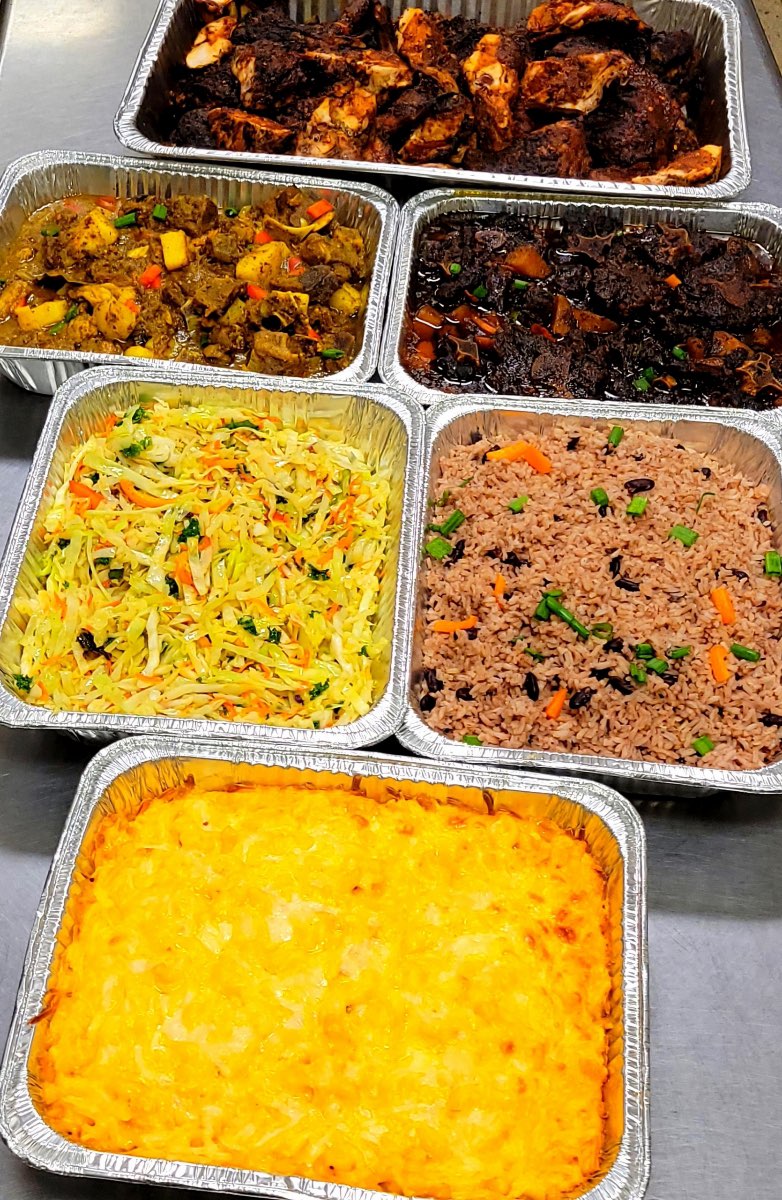
The emotional center of Sunday dinner is not always the main protein. Sometimes it is the smell in the kitchen, the argument over who gets extra roast potatoes, or the way a table gradually fills as relatives drift in. A proper Sunday plate often includes roast or fried chicken, oxtail, curried goat, or escovitch fish. Macaroni and cheese may appear in some households, especially in newer urban or overseas settings, though it is not universal. Fresh salad, steamed cabbage, and plantain may round out the meal.
What distinguishes Sunday dinner from a simple large lunch is care. Meats are seasoned overnight. Rice is cooked with attention. Gravy is finished properly. The meal says, in effect, that the day is being marked.
Fish, festivals, and coastal influences
Island cooking naturally gives fish a central role, though the style varies. Escovitch fish is perhaps the best known formal fish dish, especially for holidays, beach outings, and Sunday meals. The fish is fried until crisp, then topped with a vinegary mixture of carrots, onions, Scotch bonnet pepper, and allspice berries. The contrast is the point: hot fish, sharp pickle, and often bammy or festival alongside.
Steamed fish offers a gentler expression. It may be cooked with okra, pumpkin, cho cho, carrots, Irish potato, and plenty of herbs, producing a fragrant broth that soaks into the fish. In some homes, rundown is the more beloved fish preparation. Mackerel rundown, simmered in coconut milk with onion, garlic, tomato, and pepper until the sauce thickens, is especially popular. It is rich but not heavy when balanced correctly.
Festival, that slightly sweet fried dough, deserves more respect than it often gets. Served with fried fish or jerk, it provides contrast, not just bulk. The faint sweetness and crisp exterior help tame salt, smoke, and pepper.
Special occasion meals that carry weight
Certain dishes are tied so strongly to celebration that their presence changes the mood of a gathering. These are not always everyday foods, though some homes make them more often than others.
- Curry goat for weddings, parties, and large family events
- Ham, sorrel, and Christmas cake during the holiday season
- Bun and cheese around Easter
- Escovitch fish and fried fish for gatherings and beach outings
- Soup, especially mannish water, for dances, wakes, and community events
Curry goat is one of the clearest markers of a “special meal.” Goat takes time to clean, season, and cook properly, and when done right it offers a deeper flavor than chicken with a richness that still welcomes bright spice. A watery curry goat is a disappointment. So is goat that has not been cooked long enough to tenderize. The dish is expensive enough in many places that people reserve it for occasions worth remembering.
Christmas in Jamaica has a flavor profile all its own. Sorrel drink, often brewed with ginger and sweetened to taste, is central. So is Christmas cake, dark with dried fruit and usually soaked in wine or rum over time. Ham may be glazed and baked, and fruit cake or black cake appears in generous slices. The season is one of the few times when many households intentionally over-cater because visitors are expected.
Easter brings bun and cheese, a pairing so established that it barely needs explanation in Jamaican homes. The spiced bun, dense and lightly sweet, cut with slices of processed cheese, is one of those combinations that outsiders sometimes question until they taste it. Then it makes perfect sense.
Regional variation and the diaspora effect
There is no single Jamaican table. Rural cooking often leans more heavily on provisions, fresh-grown produce, and what is locally available. Coastal communities may have stronger fish traditions. Urban homes may rely more on quick proteins and convenience items during the workweek. Parish pride is real, even if subtle. People notice differences in jerk style, soup, pudding, and how heavily a dish is peppered.
The Jamaican diaspora has added another layer. In London, Toronto, New York, and elsewhere, Jamaican food adapts to ingredient availability, climate, and time. Some substitutions are practical. Kale may stand in for callaloo. Saltfish quality varies by market. Certain yams are harder to find, or more expensive than families remember. At the same time, diaspora kitchens preserve dishes with remarkable determination. A Christmas table in Birmingham or Brooklyn can look very similar to one in Kingston, right down to the sorrel and black cake.
Those changes produce debate. One cook swears by canned ackee, another insists only fresh will do when in season. Someone adds bell peppers to one dish, another says never. These arguments are part of a living cuisine, not evidence that one version is fake. Jamaican food has always evolved. The line most cooks care about is not rigid authenticity for its own sake, but whether the dish still tastes right.
What visitors often miss
People new to Jamaican cuisine sometimes focus only on heat, assuming every dish is intensely spicy. That is a mistake. Scotch bonnet is important, but many dishes are aromatic first and fiery second. The goal is often warmth and perfume rather than punishment. Another common misunderstanding is the idea that Jamaican food is uniformly heavy. Some meals are indeed robust, but others, like steamed fish, fish tea, or a simple plate of callaloo and boiled food, can be quite balanced.
The other thing visitors miss is how much labor and judgment sit behind seemingly simple dishes. Rice and peas sounds straightforward until you taste one pot that is fragrant and tender and another that is flat or gummy. Fried plantain looks easy until it comes out oily or burnt. A soup pot teaches patience. Jerk teaches fire management. Ackee teaches restraint.
That is why the best way to appreciate Jamaican food is not to chase only the famous dishes. Eat breakfast from a home cook if you can. Try a Saturday soup. Pay attention to the starches, not just the meat. Notice when a dish uses vinegar, when it uses coconut milk, and when pepper is left whole for aroma. Those details explain more than any menu description.
Cooking Jamaican food well at home
For cooks outside Jamaica, the smartest approach is to respect the structure of the food before getting lost in recipes. Season meat thoroughly and give it time. Use fresh herbs whenever possible. Let browning and curry serve the dish, not dominate it. Treat ground provisions as ingredients with personalities, not interchangeable fillers.
Shopping carefully helps. Good thyme, scallions with strength, fresh ginger, decent allspice, and proper Scotch bonnet peppers matter more than buying a long list of extras. If you cannot find one exact yam or leafy green, it is still possible to cook in the Jamaican style as long as you understand what function that ingredient serves. Are you replacing texture, starch, bitterness, or aroma? That question leads to better results than blind substitution.
Portioning also matters. Jamaican food is generous, but the best plates are not chaotic. A spoonful of sharp escovitch vegetables should wake up the fish, not drown it. Curry gravy should coat the rice, not flood the plate. Pepper should invite another bite, not end the meal.
A final note on judgment: homemade Jamaican food rarely tastes exactly the same from one cook to another, and that is part of its charm. One family likes sweeter fried plantain, another likes it just at the edge of caramelization. One cook makes thinner porridge, another makes it thick enough to stand a spoon in. The cuisine lives in those preferences.
Jamaican food endures because it is not built only for display. It is built to nourish, gather, comfort, stretch, and celebrate. It can be smoky and festive at a roadside jerk pan, restorative in a bowl of fish tea, deeply familiar in a plate of rice and peas with stew chicken, or ceremonial in a Christmas spread scented with sorrel and spice. To know it properly is to see all of those versions at once, the everyday meal and the special meal, each giving meaning to the other.
Reggae Pot Jamaican Grill
7562 S University Blvd C, Centennial, CO 80122
(303) 997-5623
FAQ About jamaican food
What is the best Jamaican food to try in Centennial?
The best choice depends on your preferences. Reggae Pot Jamaican Grill offers jerk chicken, curry goat, oxtail, and escovitch snapper, along with sides such as rice and peas and fried plantains. Ask the restaurant about current availability and spice levels before ordering.
Is Jamaican food very spicy in Centennial?
Heat varies by dish and preparation. Jerk dishes can be hot, while some stews and sides are milder. Tell the restaurant your preferred heat level and ask which options suit you.
What is typically on a Jamaican menu?
Common choices include jerk chicken, curries, oxtail, fish, patties, rice and peas, and plantains. Reggae Pot also lists ackee and saltfish and vegetable dishes. Menus and availability can change, so confirm your choices when ordering.